Skip to content

FREE PDF BOOKS

  • Home
  • privacy policy
  • FREE EDUCATION TOOLSFREE PDF BOOKS
  • Toggle search form

Category: ENGLISH GRAMMAR

Abused, Confused, and Misused Words A Writers Guide to Usage, Spelling, Grammar, and Sentence Structure

Posted on January 10, 2024January 10, 2024 By admin
Abused, Confused, and Misused Words A Writers Guide to Usage, Spelling, Grammar, and Sentence Structure

Share Facebook facebook group facebook group WhatsApp Read the given paragraph before download the pdf all are the free every time Chapter TwoO ld R ule s , N e w R ule sFashion, though folly’s child, and guide of fools,Rules e’en the wisest, and in learning rules.–GEORGE CRABB [1754-1832]THE TREND IN WORD USAGE is toward less formality. There is no longer a great distinction between theway one speaks and the way one writes. Both have become more casual. When people in the sameprofession such as law, medicine, psychology, or other fields communicate with each other, jargon isokay because they understand their specialized vocabulary. However, when they are writing orspeaking to a layperson, it’s best to use words that are familiar to the general public.Over the past fifty years, Americans have become less formal in many ways. Rules about dresshave become relaxed for both men and women. The rules of etiquette have become more relaxed, too.I have mixed feelings about the relaxation of the rules when it comes to language, yet I much prefer acasual style to a stilted, formal way of communicating. It puts the reader or listener at ease. And Ireally think it’s a good thing that we no longer have to worry about ending a sentence with apreposition, or dangling a participle, or misplacing a modifier. What matters is that our meaning isclear.Language changes constantly. So does spelling. So do the rules. It has been said, “rules are made tobe broken.” I don’t know about that, but I do believe in letting go of the rules when they get in the wayof what you want to say.If you choose to break the rules, however, it is probably a good idea to know what the rules (andtheir exceptions) are so that you can make a conscious, educated decision about which ones to followand which ones to ignore.In gathering qualified, up-to-date material for this book, I have consulted several recentlypublished dictionaries as well as The Chicago Manual of Style. Generally, they were in agreement asto word definitions and rules. When they differed, I chose the ones that seemed most logical to me.Included in the following are some examples of changes that have occurred over the past thirty orforty years. You will find more of these rules and usage changes in the misused words list (chapter 4).Who or WhomThe old rules stated that the choice of who or whom must be determined by the grammar of the clausewithin which this pronoun occurs. Who is the appropriate form for the subject of a sentence or clause:Who is he? He’s the man who wants the key. Whom is the objective form: Whom did he say he was?He’s a man whom I know well.Those distinctions are rarely observed anymore. Because who or whom frequently occur at thebeginning of a sentence or clause, there is a tendency to choose who no matter what the word’sfunction is. According to Webster’s New Universal Unabridged Dictionary (1996), “Even in editedprose, who occurs at least ten times as often as whom regardless of grammatical function. Only whenit directly follows a preposition is whom more likely to occur than who.” This juxtaposition is usuallyavoided now both in speech and writing, particularly in questions: Who is the letter from? Sometimesit’s avoided by omitting the pronoun altogether: All patients you have had contact with.The word whom has gone almost completely out of style. And good riddance. Most people use itincorrectly anyway. According to Random House Webster’s Unabridged Dictionary 3.0, “The notionthat ‘whom’ is somehow more ‘correct’ or elegant than ‘who’ leads some speakers to hypercorrect usesof ‘whom’: Whom are you? The person whom is in charge of the office has left the building.” Thatsounds so yesterday.The new rules seem to indicate that it’s best (and most natural) to use whom only after apreposition: to whom it may concern; to whom are you speaking? For formal writing, check yourdictionary if you aren’t sure when to use whom because there are still sticklers for the “proper” use ofthis practically archaic word and it’s best to use it correctly. Your college English professor andcertain periodicals, such as TIME magazine, will not accept the less for-mal who when whom istechnically correct. However, if your main concern is clarity and you don’t care who you impress,just use who and don’t worry about it.AbsolutesCertain words are absolutes, which means that they are complete, unconditional, and unqualifiable.Thus, according to many usage guides, one should not use comparison words with them. However,it’s done all the time.Perfect is a good example of an absolute. It means excellent or complete beyond practical ortheoretical improvement. Perfect cannot exist in varying degrees. But since the thirteenth century, theword perfect has often been qualified: the most perfect day we’ve had. A famous misuse is in theUnited States Constitution: “in order to form a more perfect union.”Another absolute is the word unique. Unique means existing as the only one or as the sole example.How can something be very one-of-a-kind? When it first entered the English language in the 1600s,its meaning was single, sole, having no equal. Unique developed the wider meaning of not typical andunusual by the mid-nineteenth century. Some examples are: He is more unique than anyone else and Itwas a very unique day.According to the dictionaries I checked, using so-called absolutes in senses that are not absolutehas become standard in most forms of speech and writing. Even so, I still choose not to use qualifierswith absolutes because, once you do that, the word is no longer an absolute.Old and New PluralsThe plurals of some words often depend on whether they are used in a scholarly work or in morecasual writing. Examples of these (noting the informal word first) are appendixes and appendices,memorandums and memoranda, millenniums and millennia, symposiums and symposia. Mostdictionaries list the less formal as the preferred usage. The same word may have different pluralsdepending on its definition. A book could have two indexes while a mathematical expression mighthave two indices.None Is vs. None AreBecause none means “not one” and “not…
Read More “Abused, Confused, and Misused Words A Writers Guide to Usage, Spelling, Grammar, and Sentence Structure” »

English, ENGLISH GRAMMAR, GRAMMAR

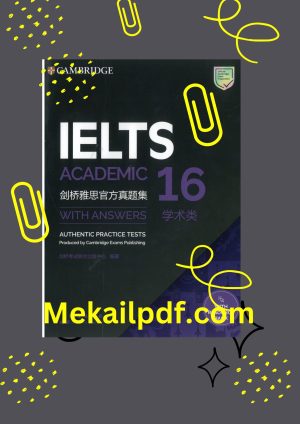
IELTS/IELTS 16 Academic Students Book with Answers

Posted on November 9, 2023December 21, 2023 By admin No Comments on IELTS/IELTS 16 Academic Students Book with Answers
IELTS/IELTS 16 Academic Students Book with Answers

IELTS/IELTS 16 Academic Students Book with Answers FREE EDUCATION TOOLS FREE PDF BOOKS FREE CLASSES FREE SENDING PDF FOR ALL VIZITERSdownloadable pdf books free for everyone specially for students.teachers and study lovers  everyone can get free pdf books from this mekailpdf.com librar GERMAN BOOKS Language Schülerduden Bedeutungswörterbuch Wortbildung und Wortschatz GERMAN BOOKS Language Schülerduden Bedeutungswörterbuch Wortbildung und Wortschatz GERMAN BOOKS Language my book English IELTS BOOKS IELTS Academic 16 With Answers Book English ENGLISH GRAMMAR English Time Workboo IELTS/IELTS 16 Academic Students Book with Answers Download pdf

English, ENGLISH GRAMMAR, English Time Workboo

How to Teach Vocabulary.pdf

Posted on November 7, 2023November 8, 2023 By admin
How to Teach Vocabulary.pdf

HOW TO TEACH VOCABULARY DISCRIPTION Teaching vocabulary effectively is essential for improving language skills. Here are some strategies and techniques to help you teach vocabulary: Contextual Learning: Teach vocabulary in context. Show students words and phrases within sentences or short passages so they can understand their meaning in a practical context. Encourage students to read extensively as this naturally exposes them to new words in context. Word Lists: Create word lists or vocabulary journals for students. They can write down new words they encounter and their meanings. Categorize words into themes or topics to make learning more organized. Word Walls: Create a “Word Wall” in your classroom, displaying new vocabulary words. This provides a visual reference for students. Flashcards: Use flashcards to help students memorize and review vocabulary words. Flashcards can include the word, a simple definition, and an image if applicable. Quiz students with the flashcards regularly to reinforce their memory. Context Clues: Teach students to use context clues, i.e., information from the surrounding text, to guess the meaning of unfamiliar words. Root Words and Affixes: Teach students common prefixes, suffixes, and root words. This knowledge can help them decipher the meaning of unfamiliar words. Thematic Approach: Teach vocabulary in thematic units. For example, focus on words related to a specific topic (e.g., food, weather, or technology) to make the learning more meaningful and connected. Games and Activities: Engage students with vocabulary games and activities, such as crossword puzzles, word searches, Scrabble, or vocabulary bingo. Use online tools and apps designed for vocabulary practice. Mnemonic Devices: Encourage students to create mnemonic devices or memory aids to remember words. These can be acronyms, rhymes, or funny associations. Word of the Day: Introduce a “Word of the Day” or “Word of the Week” to expose students to new vocabulary regularly. Reading: Encourage extensive reading. The more students read, the more they encounter new words and phrases in context. Writing: Have students write sentences or short paragraphs using the new vocabulary words. This reinforces their understanding and application of the words. Discussions and Debates: Use vocabulary words in class discussions and debates. Encourage students to use the words in meaningful conversations. Visual Aids: Use visuals, images, and diagrams to help students connect words with concrete representations. Online Resources: Utilize online vocabulary resources, such as websites, apps, and interactive exercises that provide a variety of learning methods. Assessment: Regularly assess students’ vocabulary knowledge through quizzes, tests, or assignments. Encourage Reading Aloud: Have students take turns reading passages or texts aloud. This helps reinforce pronunciation and comprehension. Teach Word Forms: Make sure students understand different forms of words (e.g., verb, noun, adjective) and how they are used in sentences. Word Etymology: Occasionally discuss the etymology of words, explaining their origins and how they evolved. Personal Dictionary: Encourage students to maintain a personal vocabulary dictionary where they keep track of new words they’ve learned and note their own examples and usage.   MEKAILPDFBOOKS FREE DOWNLOAD PDF BOOK FREEE DOWNLOAD Pdf Download Copyrights Copyrights If this website has shared your copyrighted book or your personal information. Contact us to let us know. You will receive an answer within 3 working days. A big thank you for your understanding Share on facebook Share on twitter Share on linkedin Share on whatsapp Share on email Share on print

English, ENGLISH GRAMMAR, GRAMMAR, IELTS BOOKS

Bildworterbuch Deutsch Die 500 Wichtigsten Worter In Bildern

Posted on September 27, 2023September 27, 2023 By admin No Comments on Bildworterbuch Deutsch Die 500 Wichtigsten Worter In Bildern

This Book is Not for Beginners This book provides you with the key secrets you’ll need to unlock the next level of fluency and open an entire new world of fluencydownload pdf. With this book by your side, you’ll discover that taking your skills to the next level wasn’t nearly as difficult as you originally imagined it to be. In this book you’ll not only discover the secrets, but you’ll also find the encouragement to continue in your studies. As you read these pages, you’ll feel as if you have your own personal English tutor sitting right next to you, guiding you every step of the way. Having been in the same position myself at one time and helping hundreds of others in this identical situation, I have a good idea of what’s running through your mind as we go through these steps. The content of the book is arranged so that the first chapters have a general wide appeal and will help just about everyone become better at the spoken word. As you read farther in the book each section talks about the language in a bit more success. This doesn’t mean that you can’t understand Chapter Two without reading Chapter One. Feel free to read these chapters in any order, based on your perceived personal needs. In the first chapter, we’ll review the five myths about English that are the common obstacles of most students. You’ll undoubtedly recognize at least one of them as an impediment to your learning. Once you know the myth or myths holding you back, it’ll just be a matter of time to change your thinking and continue studying. The following chapter introduces you to an effective method of creating attainable goals for yourself. Called S.M.A.R.T. goals, you’ll learn how even a minimum of planning can bring a maximum of learning. You’ll want to not waste a single minute implementing them in your learning schedule. Guaranteed. Not only will this goal-setting technique help you in pursuit of learning to speak the English language, but you can transfer these goal-setting skills to any dream you’d like to manifest. The third secret to fluency is to immerse yourself in the language. Easier said than done, you say? Most students mistakenly believe that the only way to do that is to travel to meet native speakers. That’s why the chapter is filled tips that’ll have yourself “swimming” in English before you realize it. None of these guidelines require travel or even walking up to total strangers and starting conversations. In fact, they all involve low-risk situations that will have you speaking English in safe, low-risk situations more often than you ever thought possible. When you begin reading chapter four’s secret to success, you may shake your head in disbelief, but by the time you’ve finished it you’ll be eager and excited to implement suggestions. That’s because this involves the one step most of us fear most when we’re learning anything, not just the English language. The secret key: it’s perfectly fine to make mistakes. In fact, it’s not only perfectly fine, but it’s nearly mandatory. It’s guaranteed to change your entire way of viewing the learning process. What does listening have to do with speaking a language? Everything! In the fifth step you’ll not only discover how improving this one habit can improve your fluency by leaps and bounds. The chapter also provides you with techniques to develop your active listening skills and then translate those into the breakthrough in your speaking of. Your Journey to Fluency While this volume is meant to be a student’s guidebook through the English language, it’s really so much more. You’ll find yourself referring to this book again and again in your journey of learning. Are you prepared to climb to new levels of fluency nearly effortlessly? It’s time to discover what’s been keeping you on this plateau of learning. It’s time to remove the obstacles in your path and seriously continue on this amazing path of learning you’ve set your sights on.

60 Workbooks, English, ENGLISH GRAMMAR

English Fluency For Advanced

Posted on September 22, 2023November 8, 2023 By admin No Comments on English Fluency For Advanced

This Book is Not for Beginners This book provides you with the key secrets you’ll need to unlock the next level of fluency and open an entire new world of fluencydownload pdf. With this book by your side, you’ll discover that taking your skills to the next level wasn’t nearly as difficult as you originally imagined it to be. In this book you’ll not only discover the secrets, but you’ll also find the encouragement to continue in your studies. As you read these pages, you’ll feel as if you have your own personal English tutor sitting right next to you, guiding you every step of the way. Having been in the same position myself at one time and helping hundreds of others in this identical situation, I have a good idea of what’s running through your mind as we go through these steps. The content of the book is arranged so that the first chapters have a general wide appeal and will help just about everyone become better at the spoken word. As you read farther in the book each section talks about the language in a bit more success. This doesn’t mean that you can’t understand Chapter Two without reading Chapter One. Feel free to read these chapters in any order, based on your perceived personal needs. In the first chapter, we’ll review the five myths about English that are the common obstacles of most students. You’ll undoubtedly recognize at least one of them as an impediment to your learning. Once you know the myth or myths holding you back, it’ll just be a matter of time to change your thinking and continue studying. The following chapter introduces you to an effective method of creating attainable goals for yourself. Called S.M.A.R.T. goals, you’ll learn how even a minimum of planning can bring a maximum of learning. You’ll want to not waste a single minute implementing them in your learning schedule. Guaranteed. Not only will this goal-setting technique help you in pursuit of learning to speak the English language, but you can transfer these goal-setting skills to any dream you’d like to manifest. The third secret to fluency is to immerse yourself in the language. Easier said than done, you say? Most students mistakenly believe that the only way to do that is to travel to meet native speakers. That’s why the chapter is filled tips that’ll have yourself “swimming” in English before you realize it. None of these guidelines require travel or even walking up to total strangers and starting conversations. In fact, they all involve low-risk situations that will have you speaking English in safe, low-risk situations more often than you ever thought possible. When you begin reading chapter four’s secret to success, you may shake your head in disbelief, but by the time you’ve finished it you’ll be eager and excited to implement suggestions. That’s because this involves the one step most of us fear most when we’re learning anything, not just the English language. The secret key: it’s perfectly fine to make mistakes. In fact, it’s not only perfectly fine, but it’s nearly mandatory. It’s guaranteed to change your entire way of viewing the learning process. What does listening have to do with speaking a language? Everything! In the fifth step you’ll not only discover how improving this one habit can improve your fluency by leaps and bounds. The chapter also provides you with techniques to develop your active listening skills and then translate those into the breakthrough in your speaking of. Your Journey to Fluency While this volume is meant to be a student’s guidebook through the English language, it’s really so much more. You’ll find yourself referring to this book again and again in your journey of learning. Are you prepared to climb to new levels of fluency nearly effortlessly? It’s time to discover what’s been keeping you on this plateau of learning. It’s time to remove the obstacles in your path and seriously continue on this amazing path of learning you’ve set your sights on.

60 Workbooks, English, ENGLISH GRAMMAR

English Fluency For Advanced

Posted on September 22, 2023November 16, 2023 By admin No Comments on English Fluency For Advanced
English Fluency For Advanced

Macmillan Collocations Dictionary in IELTS Using the Macmillan Collocations Dictionary in IELTSSam McCarterThe Macmillan Collocations Dictionary (MCD) is a valuable resource for anyone using English in anacademic or professional context. It shows how the most frequent words in English typically combinewith each other, and with other words, to form natural-sounding chunks of language – and this is whatmakes it an especially useful tool for people taking the IELTS exams.There is an important distinction to be made between IELTS (the International English LanguageTesting System) and other exams. The purpose of IELTS is not to to test students’ knowledge of theEnglish language, but to assess their competence in using it. Students are not awarded a pass or fail, buttheir scores are reported on a scale ranging from 1 (‘Non-User’) to 9 (‘Expert User’).The word User is critical. Rather than testing students’ knowledge of grammar or of specific vocabularyitems, IELTS evaluates their ability to use the English language in the completion of tasks (within fairlytight time limits) in the four main skills of Listening, Reading, Writing and Speaking. This focus ontesting competence rather than knowledge has implications for students and teachers alike, especiallywith regard to learning vocabulary.Let us take, for example, a student who is about to take IELTS, and who has a reasonably largevocabulary, say of around 7,500 words. A vocabulary of this size is a desirable asset for anyone aiming toachieve a score of 6.5–7 in the academic version of IELTS. But learning words from vocabulary lists is notenough. If our imaginary student has no awareness of how words work naturally together, s/he will beat a disadvantage compared to someone who may have a smaller vocabulary (say 5,000 words), but who isable to use those words effectively by combining them in natural-sounding collocations..What this illustrates is the importance of learning to use vocabulary, at speed, across tasks within thefour main skills. This will improve fluency, clarity of expression, and naturalness – and hencecompetence in general.The need for such flexibility in manipulating words to create the kinds of combination that a fluentspeaker would produce naturally is what makes the Macmillan Collocations Dictionary an idealcompanion for students as they prepare for the IELTS exam.How producing natural collocations can help IELTS studentsThere are two aspects of vocabulary that illustrate the relevance of collocation and the value of adictionary like the MCD:• the relationship between frequency and ‘coverage’: research shows that the most commonEnglish words make up a high percentage of everything we read or write. The most frequently usedwords (the top 2,500) account for almost 80% of all text, while the 7,500 most common words make upover 90%.• The relationship between frequency and collocation: the more frequent a word is, the morelikely it is to enter into ‘partnerships’ with other words, forming combinations which convey a sense ofnaturalness and style.This has implications for processing information in the four main skills tested in IELTS download READ BOOKS BOOK DOWNLOADINDG 80%

60 Workbooks, English, ENGLISH GRAMMAR, English Time Workboo, GRAMMAR

Macmillan Collocations Dictionary For Learners Of English Book

Posted on September 22, 2023September 30, 2023 By admin No Comments on Macmillan Collocations Dictionary For Learners Of English Book
Macmillan Collocations Dictionary For Learners Of English Book

Macmillan Collocations Dictionary in IELTS  Using the Macmillan Collocations Dictionary in IELTSSam McCarterThe Macmillan Collocations Dictionary (MCD) is a valuable resource for anyone using English in anacademic or professional context. It shows how the most frequent words in English typically combinewith each other, and with other words, to form natural-sounding chunks of language – and this is whatmakes it an especially useful tool for people taking the IELTS exams.There is an important distinction to be made between IELTS (the International English LanguageTesting System) and other exams. The purpose of IELTS is not to to test students’ knowledge of theEnglish language, but to assess their competence in using it. Students are not awarded a pass or fail, buttheir scores are reported on a scale ranging from 1 (‘Non-User’) to 9 (‘Expert User’).The word User is critical. Rather than testing students’ knowledge of grammar or of specific vocabularyitems, IELTS evaluates their ability to use the English language in the completion of tasks (within fairlytight time limits) in the four main skills of Listening, Reading, Writing and Speaking. This focus ontesting competence rather than knowledge has implications for students and teachers alike, especiallywith regard to learning vocabulary.Let us take, for example, a student who is about to take IELTS, and who has a reasonably largevocabulary, say of around 7,500 words. A vocabulary of this size is a desirable asset for anyone aiming toachieve a score of 6.5–7 in the academic version of IELTS. But learning words from vocabulary lists is notenough. If our imaginary student has no awareness of how words work naturally together, s/he will beat a disadvantage compared to someone who may have a smaller vocabulary (say 5,000 words), but who isable to use those words effectively by combining them in natural-sounding collocations..What this illustrates is the importance of learning to use vocabulary, at speed, across tasks within thefour main skills. This will improve fluency, clarity of expression, and naturalness – and hencecompetence in general.The need for such flexibility in manipulating words to create the kinds of combination that a fluentspeaker would produce naturally is what makes the Macmillan Collocations Dictionary an idealcompanion for students as they prepare for the IELTS exam.How producing natural collocations can help IELTS studentsThere are two aspects of vocabulary that illustrate the relevance of collocation and the value of adictionary like the MCD:• the relationship between frequency and ‘coverage’: research shows that the most commonEnglish words make up a high percentage of everything we read or write. The most frequently usedwords (the top 2,500) account for almost 80% of all text, while the 7,500 most common words make upover 90%.• The relationship between frequency and collocation: the more frequent a word is, the morelikely it is to enter into ‘partnerships’ with other words, forming combinations which convey a sense ofnaturalness and style.This has implications for processing information in the four main skills tested in IELTS download READ BOOKS BOOK DOWNLOADINDG 80%

60 Workbooks, ENGLISH GRAMMAR, Uncategorized

Deutsch Perfekt Spezial Deutsch Fur Den Beruf

Posted on August 21, 2023August 21, 2023 By admin No Comments on Deutsch Perfekt Spezial Deutsch Fur Den Beruf
Deutsch Perfekt Spezial Deutsch Fur Den Beruf

How To Speak English Fluently In 1 Week Book Pdf Download Share on facebook Share on twitter Share on linkedin Share on whatsapp Share on email Share on print

English, ENGLISH GRAMMAR, Language

Topics-for-English-Canvarstion

Posted on June 16, 2023February 23, 2024 By admin No Comments on Topics-for-English-Canvarstion
Topics-for-English-Canvarstion

How To Speak English Fluently In 1 Week Book Pdf Download Share on facebook Share on twitter Share on linkedin Share on whatsapp Share on email Share on print

English, ENGLISH GRAMMAR, Language

German Grammar in Context, Second Edition.pdf

Posted on February 22, 2023August 17, 2023 By admin No Comments on German Grammar in Context, Second Edition.pdf
German Grammar in Context, Second Edition.pdf

How To Speak English Fluently In 1 Week Book Pdf Download Acknowledgements ix List of grammatical terms x 1 Gender 1 2 noun plurals 6 3 Case 11 4 Use of articles 21 5 Adjectives 28 6 Comparatives and superlatives 37 7 Personal pronouns and possessives 43 8 demonstratives 51 9 Relative pronouns 57 10 Present tense 63 11 imperative 70 12 Past tense 74 13 Perfect tense 81 14 Pluperfect tense 88 15 Future tense 91 16 Conditional 96 17 Subjunctive in reported speech 103 18 Passive 113 19 Separable verbs 121 20 Reflexive verbs 125 vi Contents 21 infinitives and modal verbs 131 22 negation 140 23 Questions 147 24 Prepositions 151 25 Conjunctions 163 26 Word order 170 27 Word formation 180 28 Punctuation and spelling 190 Appendix 1: Common strong and irregular verbs 196 Appendix 2: Article and adjective endings 200 Appendix 3: Revision texts 202 Appendix 4: Key to exercises 217 Appendix 5: Key to revision texts: analysis questions 236 Recommended reading 241 index Acknowledgements ixList of grammatical terms x1 Gender 12 noun plurals 63 Case 114 Use of articles 215 Adjectives 286 Comparatives and superlatives 377 Personal pronouns and possessives 438 demonstratives 519 Relative pronouns 5710 Present tense 6311 imperative 7012 Past tense 7413 Perfect tense 8114 Pluperfect tense 8815 Future tense 9116 Conditional 9617 Subjunctive in reported speech 10318 Passive 11319 Separable verbs 12120 Reflexive verbs 125vi Contents21 infinitives and modal verbs 13122 negation 14023 Questions 14724 Prepositions 15125 Conjunctions 16326 Word order 17027 Word formation 18028 Punctuation and spelling 190Appendix 1: Common strong and irregular verbs 196Appendix 2: Article and adjective endings 200Appendix 3: Revision texts 202Appendix 4: Key to exercises 217Appendix 5: Key to revision texts: analysis questions 236Recommended reading 241index Share on facebook Share on twitter Share on linkedin Share on whatsapp Share on email Share on print

English, ENGLISH GRAMMAR, Language

How To Speak English Fluently In 1 Week Book

Posted on February 9, 2023February 9, 2023 By admin No Comments on How To Speak English Fluently In 1 Week Book
How To Speak English Fluently In 1 Week Book

How To Speak English Fluently In 1 Week Book Pdf Download Share on facebook Share on twitter Share on linkedin Share on whatsapp Share on email Share on print

English, ENGLISH GRAMMAR, Language

Spoken English Conversation Practice,

Posted on February 8, 2023February 8, 2023 By admin No Comments on Spoken English Conversation Practice,
Spoken English Conversation Practice,

German in 30 days Pdf Download Share on facebook Share on twitter Share on linkedin Share on whatsapp Share on email Share on print

English, ENGLISH GRAMMAR, Language

German in 30 days

Posted on February 8, 2023February 9, 2023 By admin No Comments on German in 30 days
German in 30 days

Pdf Download Share on facebook Share on twitter Share on linkedin Share on whatsapp Share on email Share on print

ENGLISH GRAMMAR, English Time Workboo, Uncategorized

How To Write Essays; A Step-by-step

Posted on February 8, 2023February 9, 2023 By admin No Comments on How To Write Essays; A Step-by-step
How To Write Essays; A Step-by-step

Pdf Download Share on facebook Share on twitter Share on linkedin Share on whatsapp Share on email Share on print

English, ENGLISH GRAMMAR, English Time Workboo, Language

Practice Makes Perfect English Conversation

Posted on February 6, 2023February 6, 2023 By admin No Comments on Practice Makes Perfect English Conversation
Practice Makes Perfect English Conversation

Pdf Download Share on facebook Share on twitter Share on linkedin Share on whatsapp Share on email Share on print

English, ENGLISH GRAMMAR, English Time Workboo, Language

Complete English All-in-One for ESL Learners Book

Posted on November 27, 2022 By admin No Comments on Complete English All-in-One for ESL Learners Book
Complete English All-in-One for ESL Learners Book

Share on facebook Share on twitter Share on linkedin Share on whatsapp Share on email Share on print Share Share on facebook Share on twitter Share on linkedin Share on whatsapp Share on email Share on print Pdf Download

60 Workbooks, English, ENGLISH GRAMMAR, FRENCH, GRAMMAR, Language
No comments to show.

Categories

  • 60 Workbooks
  • English
  • ENGLISH GRAMMAR
  • English Time Workboo
  • FRENCH
  • GERMAN BOOKS
  • GRAMMAR
  • IELTS BOOKS
  • Language
  • storeis
  • Uncategorized

Copyright © 2026 .

Powered by PressBook WordPress theme